Why Gold Investing Still Matters
Gold has remained a timeless asset through centuries of economic change. In uncertain times, when markets fluctuate and currencies lose value, gold investing becomes an anchor for stability. Its role is no longer limited to being a safe-haven asset — it’s now a strategic part of diversified, modern portfolios.
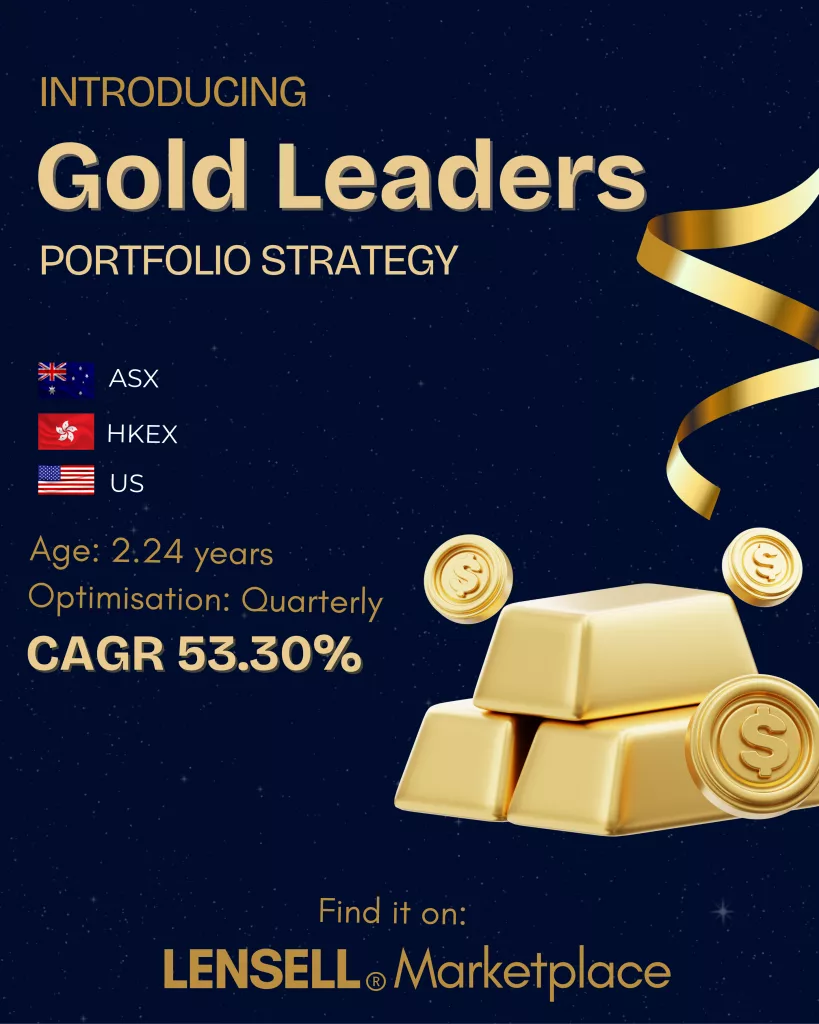
As LENSELL’s Gold Leaders Portfolio Strategy demonstrates, gold can be more than a defensive asset. By blending exposure through gold ETFs and gold stocks, investors can create an adaptive gold portfolio designed for both resilience and opportunity.
The Modern Gold Portfolio: Beyond Physical Gold
In the past, investing in gold meant owning physical bars or coins stored securely in vaults. Today, technology and innovation have opened more accessible options. A modern gold portfolio often includes:
- Physically backed gold ETFs that track the spot price of gold
- Gold stocks (shares in mining or exploration companies)
- Gold mining ETFs that hold a diversified basket of producers
The Gold Leaders Portfolio by LENSELL applies quantitative optimisation to these exposures — adjusting them quarterly to achieve the best balance between risk and return. This model doesn’t just hold gold passively; it actively manages allocations as markets shift.
By treating gold as a portfolio component rather than a static hedge, investors can harness both stability and growth potential.
Gold ETFs: Convenience Meets Efficiency
Gold ETFs (Exchange-Traded Funds) have transformed gold investing for everyday investors. They offer liquidity, accessibility, and transparency — all without the need for storage or insurance.
There are two main types of gold ETFs:
- Physically backed ETFs: hold actual gold bullion and mirror gold’s spot price (e.g. ASX:PMGOLD, GLD).
- Gold mining ETFs: hold shares of mining and refining companies, offering indirect but often higher-beta exposure.
In LENSELL’s strategy, physically backed ETFs form the stable foundation of the gold allocation. This ensures the portfolio maintains a reliable connection to the underlying metal while still allowing for tactical allocations to mining equities when markets are favourable.
For authoritative and up-to-date gold market data, visit the World Gold Council’s Goldhub Data Center, which offers insights into global gold prices, volatility, and investment trends.
Gold Stocks: The Growth Engine of Gold Investing
While physical gold and ETFs provide safety and liquidity, gold stocks add growth potential. These are shares in companies involved in mining, refining, or exploring gold deposits.
Gold stocks often amplify gold price movements — rising faster when gold prices climb, but also falling harder when they decline. This leverage makes them riskier but potentially more rewarding.
A diversified mix of gold producers across Australia, North America, and Asia can help balance these risks. That’s why LENSELL’s Gold Leaders Portfolio includes multiple regions and liquidity screens before choosing gold stocks.
For investors, the takeaway is clear: gold stocks can power returns, but they should be part of a diversified, well-rebalanced gold portfolio rather than the sole exposure.
For additional perspective on global gold holdings, see the World Gold Council’s Central Bank Gold Reserves by Country page.
The Art of Rebalancing and Portfolio Optimisation
Gold markets are cyclical. Prices can swing sharply with inflation data, bond yields, or geopolitical headlines. That’s where portfolio optimisation plays a crucial role.
LENSELL’s model re-optimises allocations quarterly, recalibrating exposure between gold ETFs and gold stocks. This approach aims to maximise returns for a target risk level — much like Modern Portfolio Theory principles used in Diversiview.
Rebalancing offers two main benefits:
- Maintaining target allocation: Prevents overexposure to one asset class.
- Capturing opportunity: Allows adjustment when correlations or volatilities change.
Even retail investors can apply this by setting periodic rebalancing rules (e.g. quarterly, annually or semi-annually) or using digital tools that automate optimisation.
Key Risks and Considerations in Gold Investing
Despite its appeal, gold investing has some important caveats. Understanding these helps set realistic expectations:
- No income generation: Gold doesn’t pay dividends or interest.
- Volatility: Particularly high in gold mining shares.
- Opportunity cost: Capital invested in gold could earn returns elsewhere.
- Fees and taxes: ETF management fees, transaction costs, and potential capital gains taxes.
- Model assumptions: Quantitative backtests (like LENSELL’s) are based on historical data and cannot guarantee future results.
Still, these are manageable through disciplined allocation and diversification. Gold should complement — not replace — other asset classes.
For benchmark daily gold prices, the London Bullion Market Association (LBMA) Precious Metal Prices page provides globally recognised reference rates.
Building Your Gold Portfolio: A Step-by-Step Framework
Here’s a practical framework for investors building their own gold allocation:
- Define your objective — wealth preservation, inflation hedge, or tactical growth.
- Set allocation size — use portfolio tools (e.g. Diversiview) to calculate the best allocation that works well with your existing investments.
- Choose your mix — combine physically backed gold ETFs (stability) and gold stocks (growth).
- Diversify geographically — consider miners from different regions to reduce geopolitical risk.
- Rebalance periodically — quarterly or annually, depending on strategy.
- Monitor performance — use analytics tools (e.g. Diversiview) to assess diversification, correlation, and return drivers.
By treating gold as a strategic component within a data-driven framework, you can achieve better risk-adjusted outcomes than simply “buying and holding” gold.
Final Thoughts: Why Gold Belongs in the Modern Portfolio
Gold remains one of the few assets with truly global recognition and zero counterparty risk. In a world of digital assets, political volatility, and shifting monetary policies, it continues to serve as both insurance and opportunity.
Whether through a physically backed gold ETF, a curated selection of gold stocks, or an actively managed gold portfolio like LENSELL’s Gold Leaders model, investors can participate in gold’s long-term potential while maintaining diversification.
As 2025 unfolds, gold investing stands out not as a nostalgic return to the past — but as a forward-looking strategy grounded in data, discipline, and diversification.
Interested in this portfolio strategy?
Read more and subscribe to get the composition and weights.
Disclaimer:
This is not personal advice. The Gold Leaders Portfolio Strategy reflects on possible scenarios that have been constructed based on data, research and insights without taking in consideration any personal needs, goals or requirements of any subscriber. Subscribers take all responsibility if they decide to act on this scenario related to the Gold Leaders Portfolio Strategy.
Lensell Group Pty Ltd, ACN 646 467 941, trading as LENSELL, is a Corporate Authorised Representative of Foresight Analytics & Ratings Pty Ltd ( Australian Financial Services Licence No. 494552). All information provided to you by LENSELL is intended for general informational purposes only. It does not consider your individual financial circumstances and should not be relied upon without consulting a licensed investment professional or adviser.
The content on this website and in any of its applications is not a financial offer, recommendation, or advice to engage in any transaction. Investment products referenced in our software or marketing literature carry inherent risks, and you should note that past performance does not guarantee any future results.
Please review our Financial Services Guide, Terms of Service and Privacy Policy, and speak with a registered financial planner or advisor before making any decisions regarding your investments.